DV Lottery Photo Tool: Make a DV Lottery Photo Online for Free
One DV Lottery photo. One shot per year — and no way to swap it out once your DV entry is in. The PhotoGov DV Lottery Photo Tool crops and centers your entry photo to the size and framing published by the U.S. Department of State and places it on a white background: a square JPEG, exactly 600×600 pixels, 240 KB or less. Works on any laptop, smartphone, or browser — no editing skills needed.
DV Lottery entry-ready · No app · 30 seconds
Please note that a green card interview requires a different photo: you can make it here
Source: US Department of State — Diversity Visa Lottery Photo Requirements
PhotoGov is an independent service. We are not affiliated with any government, embassy, or consulate. All information on this website is based on official government requirements and verified primary sources. Final acceptance is determined solely by the issuing authority.
Turn Your Selfie Into a DV Lottery Photo Now
Simply upload a selfie taken within the past 6 months, download your entry photo, and file it with your entry at dvlottery.state.gov. Use the widget below to create your DV lottery photo by following the on-screen instructions.
Get photo for: US Electronic Diversity Visa Lottery (600x600 px, 2x2 inches, white bg)
Instructions:
How to take a good photo?
1/7 Image format
Photo must be in color. Taken within the last 6 months.
How to take a good photo?
1/7 Image format
Photo must be in color. Taken within the last 6 months.
ID & Passport Photo Tool. Your personal data is processed in accordance with security and privacy standards.
If you need assistance, don't hesitate to contact our Support team, which is always there to help.
How Our DV Lottery Photo Tool Works
Our DV Lottery photo tool automatically applies all official DV Lottery photo parameters to your original portrait. It crops the image to 600 × 600 pixels and saves the file as a JPEG of up to 240 KB, as required by the U.S. Department of State. Take your entry photo against a plain, light, evenly lit wall: the U.S. Department of State requires a plain white or off-white background.
Since DV Lottery applicants have only one chance to submit their entry, strict photo compliance is critical. At checkout, you can add Human Verification — a manual review by a senior compliance specialist who evaluates your photo and outlines its acceptance likelihood. Wear your everyday clothing (including religious wear). Uniforms, camouflage, and military attire are not allowed. Photos must not be digitally enhanced or altered to change your appearance in any way.
Photo Upload
Take a selfie and upload it to PhotoGov
Service Selection
Add Human Verification, or bundle other PhotoGov services
Processing
Wait while automatic resizing and cropping are applied
Download
Get an entry-ready 600x600 px DV lottery photo
Written by Olia Potiagaeva, Managing Editor Reviewed by the PhotoGov Editorial Team★ 4.8 / 5.0 GoogleChecked against official government requirements
On THIS PAGE:
- Turn Your Selfie Into a DV Lottery Photo Now
- How Our DV Lottery Photo Tool Works
- What is a DV Lottery Photo?
- Your Final DV Lottery Photo from PhotoGov
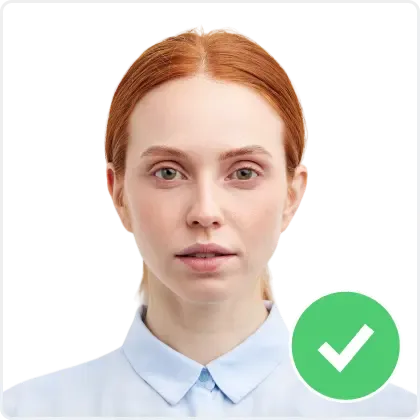
- DV Lottery Photos That Pass the U.S. Department of State Automated Checks
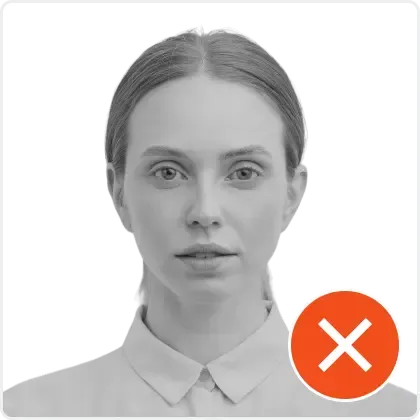
- DV Lottery Photos That Don’t Pass the U.S. Department of State Automated Checks
- Why Use the PhotoGov DV Lottery Photo Tool
- Important: Read Before You Submit Your DV Entry
- How PhotoGov Aligns Your Photo with the Diversity Visa Lottery Photo Specifications
- Frequently Asked Questions
- Official Government Sources
- Other Documents — US ID Photos
What is a DV Lottery Photo?
The DV Lottery Photo editor crops your image to the selected format and positions the head within the frame. It sizes the picture you upload without changing your facial features, and the built-in photo checker tests the file against the selected format. The selected format is 600 x 600 pixels. Before you submit the photo, check the photo instructions for the application you are completing.
The official digital photograph required for entry into the Diversity Visa (DV) Lottery program.
A JPEG file cropped to the Diversity Visa photo size published by the U.S. Department of State.
Submitted electronically at dvlottery.state.gov during the annual DV entry window as part of a single, non-repeatable application session.
Your Final DV Lottery Photo from PhotoGov
PhotoGov automatically applies the U.S. Department of State standards for size, crop, and framing to your original photo and places it on a white background. Final acceptance is determined solely by the U.S. Department of State. Below are the key technical parameters of your final Diversity Visa Lottery photo from PhotoGov.
For a full overview of official standards, please see our DV Lottery Photo Requirements Guide.
Parameter | Your Final Photo |
Photo size | 600 × 600 pixels |
Head height | 50–69% of the photo height |
Background | Plain, white |
File format | JPEG |
File size | Under 240 KB |
Head positioning | Automatically centered |
Color | Full color |
Face visibility | Fully visible, no retouching |
Submission | Ready for an electronic upload at dvlottery.state.gov during the annual entry window |
If your photo is rejected due to technical issues on PhotoGov’s side, we provide a free retake or a full refund.
Your photo is processed in a private session in a secure environment. Facial features are never altered — the tool only adjusts the size, crop, framing, and background of your original photo. If you want extra reassurance, optional Human Verification is available at checkout.
DV Lottery Photos That Pass the U.S. Department of State Automated Checks
Plain white/off-white background, exactly 600×600 pixels, JPEG, 240 KB or less, head centered at 50–69% of frame height, neutral expression, mouth closed, eyes open, no glasses, no facial obstructions, no military wear, religious clothes don’t cover the face, no filters, no shadows.
DV Lottery Photos That Don’t Pass the U.S. Department of State Automated Checks
Colored or patterned background, head too small or too large, head off-center or tilted, glasses on, smiling with teeth, shadows on face or wall, beauty filters, military or camouflage clothing, religious clothes that cover the face, a dimension other than 600×600 pixels, non‑JPEG formats (such as PNG or HEIC), file larger than 240 KB.
Why Use the PhotoGov DV Lottery Photo Tool
Convenience
Intuitive and fast, delivers a digital file for a direct upload
Requirements-Aligned Output
Designed to meet the current DV Lottery photo guidelines
Availability
No registration, installation, or studio visits
Extra Assurance
Optional Human Verification by an in-house compliance specialist
Secure Processing
Your data is secure and not transferred to third parties
Our platform is designed to align with the U.S. Department of State Diversity Visa Lottery photo rules. Final acceptance of your DV Lottery photo is determined by the automated screening system at dvlottery.state.gov.
Important: Read Before You Submit Your DV Entry
The Diversity Visa entry process leaves no room to fix a bad photo once it is submitted. Four things every applicant should know before uploading anything to dvlottery.state.gov:
1. One entry per person, per year
The US Department of State accepts only a single DV entry per applicant per fiscal year. Submitting more than one disqualifies all your entries without a refund or appeal — under 9 FAM 502.6 and INA 204(a)(1)(I)(i). Trying to fix a bad photo by submitting a second entry is the fastest way to lose your chance for the year.
2. Your photo cannot be replaced after submission
Once you receive your confirmation number from the DV Entrant Status Check system, the entry — and the photo attached to it — is final. There is no facility to log back in and upload a corrected image.
3. The upload check is automated and gives no feedback
The dvlottery.state.gov system runs an automated photo check the moment your file is uploaded, but it does not tell you which parameter failed or whether anything looks borderline. A photo that goes through at upload can still be reviewed at the consular interview stage — and if a problem is found there, it can disqualify an otherwise selected entry.
4. PhotoGov produces the photo; its acceptance is at the discretion of an automated system
PhotoGov is an independent photo service — a photo maker and a DV Lottery photo checker. We prepare a digital file aligned with the Diversity Visa Lottery Photo Specifications, but we do not file DV entries on your behalf, and we cannot guarantee that any individual photo will be accepted. The photo is one component of an entry you are responsible for submitting yourself.
How PhotoGov Aligns Your Photo with the Diversity Visa Lottery Photo Specifications
PhotoGov turns a regular selfie into a compliance-aligned Diversity Visa photo file. It applies every parameter set out in the Diversity Visa Lottery Photo Specifications: Exactly 600×600 pixels, a plain white background, JPEG of 240 KB or less, with the head 50–69% of the image height and the eye level 56–69% of the height measured from the bottom edge of the image. Each processed photo has a plain white background and the head centered in the frame. Final acceptance of any DV entry photo remains at the full discretion of the issuing authority.
If you are uncertain about your photo, add a Human Verification service upon checkout: our senior compliance specialist reviews your image and gives expert feedback on the acceptance likelihood.
The DV Lottery runs on an annual cycle. However, as of August 10, 2026, the DV‑2027 registration dates have not yet been announced. According to the U.S. Department of State notice of November 5, 2025, the start date for the DV‑2027 registration period and the date DV‑2027 results become available through the Entrant Status Check will be announced on travel.state.gov as soon as practicable. These changes do not affect the immigrant visa application window for selected DV‑2027 entrants, which remains October 1, 2026, through September 30, 2027.
For other US photo services, try our dedicated tools: US Passport Photo Maker, US Visa Photo Tool, Green Card Photo Maker, and Digital Passport Photo Maker.
Frequently Asked Questions
The correct DV Lottery photo size is exactly 600×600 pixels, square format, saved as a JPEG of 240 KB or less. To resize your photo to these dimensions without distorting proportions, upload your selfie to the PhotoGov’s DV Lottery Photo Tool. It automatically scales your image to 600×600 pixels, crops it to the correct framing, head size, and positioning ( 50–69% of the frame height), and delivers a file within the required size range. No manual resizing or guesswork with manual photo editing is required from you.
The best online DV Lottery photo checker is one that validates every official requirement in a single automated step: pixel dimensions (exactly 600×600 pixels), head-to-photo height ratio (50–69%), plain white or off-white background, JPEG format, and file size up to 240 KB.
PhotoGov runs all of these checks automatically after processing your selfie, flagging any parameter that falls outside the U.S. Department of State specification before you download a final photo. If you want a human expert to review the result, you can add the optional Human Verification service.
Cropping a DV Lottery photo to the exact 600×600 pixel square requires more than just cutting the image — the crop must also place the head correctly so the face fills 50–69% of the photo height, with the crown of the head positioned just below the top edge and clear space above.
PhotoGov handles this automatically: it detects your face, calculates the biometric crop zone, and centers your head within the square frame.
To verify a DV Lottery photo before submission, check it against every official requirement published by the U.S. Department of State: size (exactly 600×600 pixels), head height ratio (50–69%), plain white or off-white background, no glasses, neutral expression, JPEG format, and file size under 240 KB.
Doing this manually is error-prone — a single out-of-spec parameter is enough for the system to flag or reject your entry photo. PhotoGov checks the file against the published requirements during processing. For extra certainty, our Human Verification service provides a specialist review before download.
No online service can legally guarantee that your photo will be accepted by the U.S. Department of State’s automated system when you submit your DV Lottery entry. A reliable DV Lottery photo editor formats your photo to the published requirements and checks the final file before you download it. This includes dimensions of exactly 600×600 pixels, a head size ratio of 50–69%, a plain white or off-white background, JPEG format, and a file size of up to 240 KB. A trustworthy tool will not alter your facial features or expression, focusing instead on technical compliance such as cropping, background, and file-size optimization.
PhotoGov automatically checks your original background against the plain white/off-white requirement. Our background detection algorithm works across a wide range of original environments — light walls, neutral surfaces, and even moderately textured backgrounds. The tool checks the image for any residual color fringe or shadow that could cause a compliance failure, and flags issues before you download. The final photo produced with our DV Lottery photo editor has a plain background free from patterns, gradients, objects, or shadows, as required by the U.S. Department of State.
You cannot fix and resubmit a rejected DV Lottery photo within the same DV Lottery entry: if your photo (and entry) is rejected by the official system, that submission cannot be corrected or resubmitted. What you can do is prepare a fully compliant photo before you submit your next eligible DV Lottery entry in a future registration period. To do this, start by identifying typical issues such as wrong dimensions, incorrect head ratio, colored or patterned background, file size above the limit, or visible glasses.
Upload your original image — or take a new selfie — to the PhotoGov’s DV Lottery Photo Tool. It automatically applies the current technical requirements of the U.S. Department of State: dimensions of exactly 600×600 pixels, head size 50–69% of the frame, a plain white background, JPEG format, and a file size within the 240 KB limit.
For best results, retake your photo against a plain white or light-colored wall, ensure your face is evenly lit and centered in the frame, remove glasses, and keep a neutral expression. If the original photo has fundamental issues such as motion blur, harsh shadows, or low resolution, taking a new selfie is the only reliable way to prepare a DV‑compliant photo before your single DV Lottery submission.
The most frequent reasons DV Lottery photos are rejected include:
Incorrect image dimensions (any size other than 600 × 600 pixels).
Head height outside the required 50–69% of the image’s total height.
A background that is not plain white or off‑white (for example, colored, patterned, or textured).
Shadows visible on the background or on the applicant’s face.
Glasses worn by the subject
(glasses have been prohibited in DV photos since 2016)
.
A photo that has been digitally altered, filtered, or heavily retouched in a way that changes appearance.
File size over 240 KB or a format other than JPEG.
Poor technical quality, such as low resolution, blur, noise, compression artifacts, or pixelation.
Use this as a checklist or refer to our full DV Lottery Photo Guide before submitting your entry.
The PhotoGov DV lottery photo tool checks your photo against the official US Department of State specifications; in the US, a digital DV photo costs $5.50, or $6.50 with a printable sheet. Upload your selfie, select the DV Lottery template, and the tool applies and checks every required parameter: exactly 600 × 600 pixels, 50–69% of the frame head size, a plain white background, JPEG format, and file size up to 240 KB. The validated digital file is available for immediate download. An optional Human Verification service is available for an additional fee if you want a compliance specialist to review the photo before you submit.
Correct face centering in a DV Lottery photo means your head is centered horizontally in the 600×600-pixel frame and you are facing the camera directly, without tilting or turning your head. The top of your head should be just below the upper edge of the image, and your chin should be clearly above the lower edge, so that your head occupies 50–69% of the overall photo height.
The DV lottery head size rule requires your face — measured from the bottom of the chin to the top of the head (including hair) — to occupy between 50% and 69% of the total photo height, which translates to approximately 300–414 pixels in the 600×600 px frame. If your head is too small (face too far from the camera) or too large (face too close), the proportions fall out of spec. A reliable DV Lottery photo editor measures the head ratio automatically and adjusts the crop to bring it within the valid range. If the original photo cannot produce a compliant crop — for example, because the selfie was taken from too far away — the tool will ask you to upload a closer shot.
The US Department of State requires the DV lottery photo to be a JPEG file up to 240 KB. PhotoGov produces a JPEG output automatically, with compression calibrated to stay within the valid file size range while preserving enough image detail to meet the minimum quality standard. You do not need to adjust export settings manually. After download, the file is ready to attach directly to dvlottery.state.gov during the entry window. If you need a printable version — for example, for a physical visa appointment later in the process — PhotoGov can also generate a formatted print sheet.
Yes. PhotoGov applies the current US Department of State photo specifications, which have remained consistent across recent DV Lottery cycles. As of August 10, 2026, the U.S. Department of State has not announced the DV-2027 registration dates. For the DV-2027 entry period, when it’s open by the U.S. Department of State, PhotoGov will reflect the specifications in force at that time. If you are preparing your entry in advance, check the official dvlottery.state.gov portal to confirm the entry window dates and any updated photo guidance before submitting.
In the US, a digital DV photo costs $5.50, or $6.50 with a printable sheet. Upload your portrait, let the tool apply the required size and crop, and download your digital file, or add Human Verification at checkout for an additional fee.
Yes. Our DV Lottery photo checker 2027 runs entirely in your mobile browser — Chrome, Safari, or Firefox on iOS and Android. No app to download, no account to register. Tap upload, take a selfie, or choose an existing photo from your gallery, and the tool returns a DV-ready JPEG you can save directly to your phone. Practical for preparing a DV-2027 entry photo from home, no desktop required.
A single JPEG file of exactly 600 × 600 pixels, up to 240 KB, with a plain white background — the exact format required for DV lottery entries at dvlottery.state.gov. The final file is ready to attach directly to your DV entry: no resizing, no recompression, no format conversion on your side.
No. The US Department of State permits only one DV entry per person per fiscal year. Submitting more than one — whether under your own name or by being listed twice — disqualifies all your entries. The DV system uses biometric matching on your photo to detect duplicates, which is one of the reasons photo quality matters.
Yes. Your spouse and each child under 21 listed on your DV entry must have a separate photo that meets the published requirements. The DV system rejects entries with missing or duplicated family-member photos. PhotoGov can produce a DV photo for each family member from an individually uploaded selfie.
Yes. PhotoGov handles your uploaded image and any personal information solely for the purpose of producing your DV lottery photo. Your data is processed on secure servers in a private session and is not shared with third parties, government agencies, or external AI services. In line with our data retention policy, uploaded images are deleted after processing is complete — they are not stored, indexed, or used for any other purpose. PhotoGov does not sell or monetize user data in any form. For the complete details of how your data is managed, see our Privacy Policy.
Yes. Open photogov.net in the phone browser, upload a picture and download the finished file. No app is required; the PhotoGov app for iOS and Android does the same job if you prefer it.
No. PhotoGov applies the selected format automatically: the tool sets the frame and the head position for you. Before you submit the photo, check the photo instructions for the application you are completing.
PhotoGov.net strictly adheres to the global regulations for ID photos.
Official Government Sources
DV Lottery Photo Requirements: The U.S. Department of State — Travel
Diversity Visa Instructions: The U.S. Department of State — Travel
Electronic Diversity Visa Entry Form (E-DV): dvprogram.state.gov
DV Photo Validator and Template Tool: The U.S. Department of State — Photo Tool
9 FAM 504.4-4 — Photographs: Foreign Affairs Manual, U.S. Department of State
22 CFR §42.33 — Diversity Immigrants: Code of Federal Regulations
Biometric Regulations for International ID Documents: International Civil Aviation Organization (ICAO) Document 9303
Other Documents — US ID Photos
United States
30 doc.
- Baby Passport Photo
- CIBTvisas visa photo (any country)
- CVS photo
- Digital Passport Photo
- Travisa visa photo (any country)
- US Citizenship (naturalization) 2x2 inch (51x51 mm)
- US Electronic Diversity Visa Lottery (600x600 px, 2x2 inches, white bg)
- US Employment Authorization 2x2 inch (51x51 mm)
- US Green Card (Permanent Resident) 2x2
- US NFA ATF form 2x2 inch
- US NY Gun License 1.5x1.5 inch
- US NY MTA Metrocard for Seniors
- US Passport 2x2 inch (51x51 mm)
- US Veteran ID Card 2x2 inch
- US Visa 2x2 inch (600x600 px, 51x51mm)
- US passport card 2x2 inch
- USA CCHI ID badge 3x3 inch
- USA FOID 1.25x1.5 inch
- USA Form I-130 2x2 inch
- USA Nursing License 2x2 inch
- USA PADI certification card 45x57 mm (1.75x2.25 inch)
- USA Re-entry Permit 2x2 inch
- USA SAT 2x2 inch
- USA advance parole 2x2 inch
- USA bar examination 300x300 pixels
- USA crew visa 2x2 inch
- USA welding certificate 2x2 inch
- Visa Headquarters visa photo (any country)
- VisaCentral visa photo (any country)
- VisaHQ visa photo (any country)
Service provided by Y VISION TECHNOLOGIES LLP · Stoney Works 8 Stoney Lane, London, England, SE19 3BD · Terms · Refund policy · Contact
We value your Privacy
We use cookies to enhance your browsing experience, serve personalized ads or content. By clicking “Accept All”, you consent to our use of cookies.