What to Wear for a U.S. Passport Photo: Clothing, Hair, Makeup and Jewelry
Table of contents:
- Quick Answer: U.S. Passport Photo Dress Code
- The U.S. Department of State Passport Photo Clothing Requirements
- Passport Photo Clothing Colors and Styles: Best Shirts to Wear
- Passport Photo Hair and Facial Hair Rules: Hair Up or Down, Bangs, and Beards
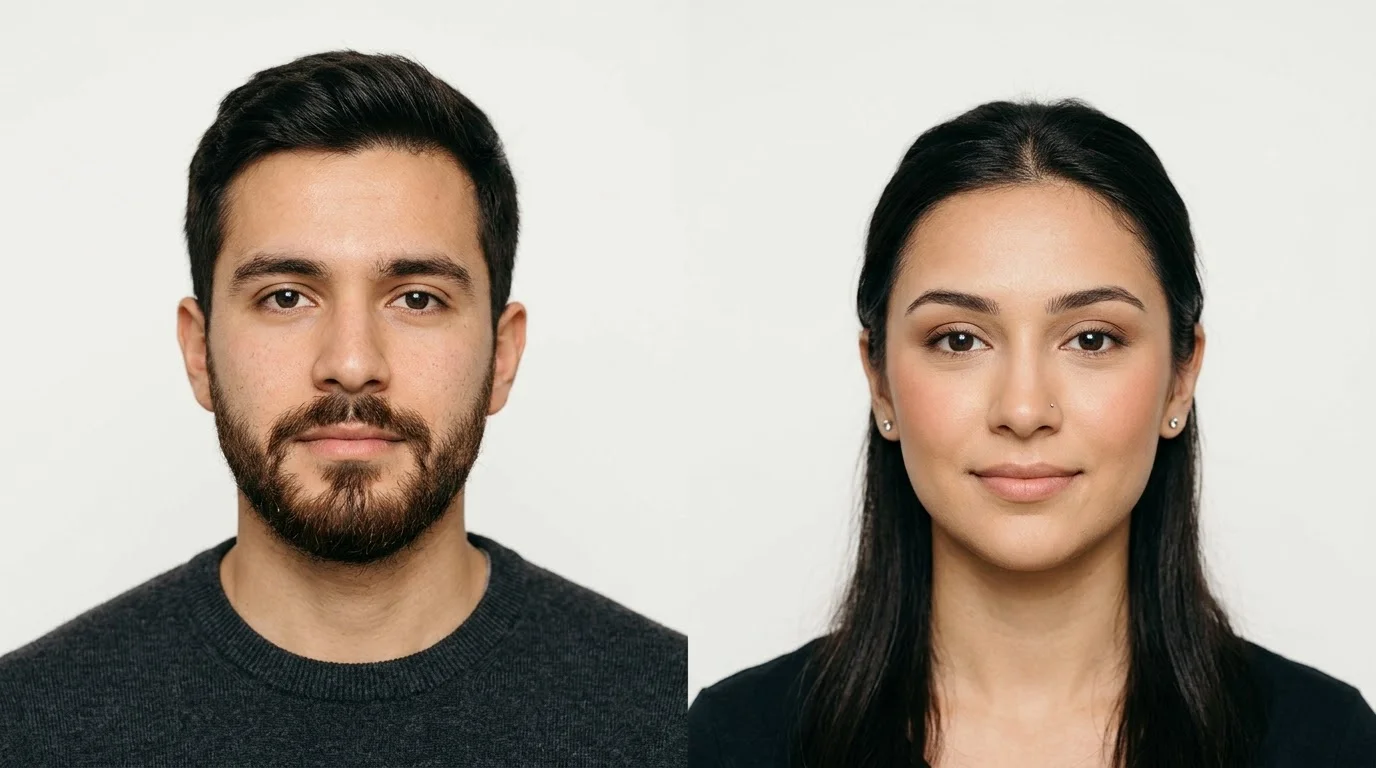
- Makeup, Jewelry, Piercings, and Tattoos in a Passport Photo
- Passport Photo Glasses and Head Covering Rules
- What Babies and Children Should Wear for a Passport Photo
- Passport Photo Facial Expression Rules
- Before the Capture: Passport Photo Dress Code Checklist
- Frequently Asked Questions
- Official Government Sources
Knowing what to wear for a passport photo helps you prepare an application portrait that meets federal standards and looks clear against a white backdrop. This guide covers official U.S. Department of State dress code rules, plus practical tips on shirt colors, hairstyles, makeup, and accessories for at-home or studio shoots. After you take your photo, you can crop the frame and set the background with our U.S. passport photo tool
Quick Answer: U.S. Passport Photo Dress Code
For a U.S. passport photo, wear normal, everyday clothing in a solid color that contrasts clearly with the plain white background. Official rules prohibit uniforms, clothing that resembles military or camouflage attire, hats, head coverings, and eyeglasses. Exceptions apply only to head coverings worn for documented religious or medical reasons and eyeglasses required for documented medical reasons. Browse our U.S. passport photo examples to see proper clothing contrast and framing.
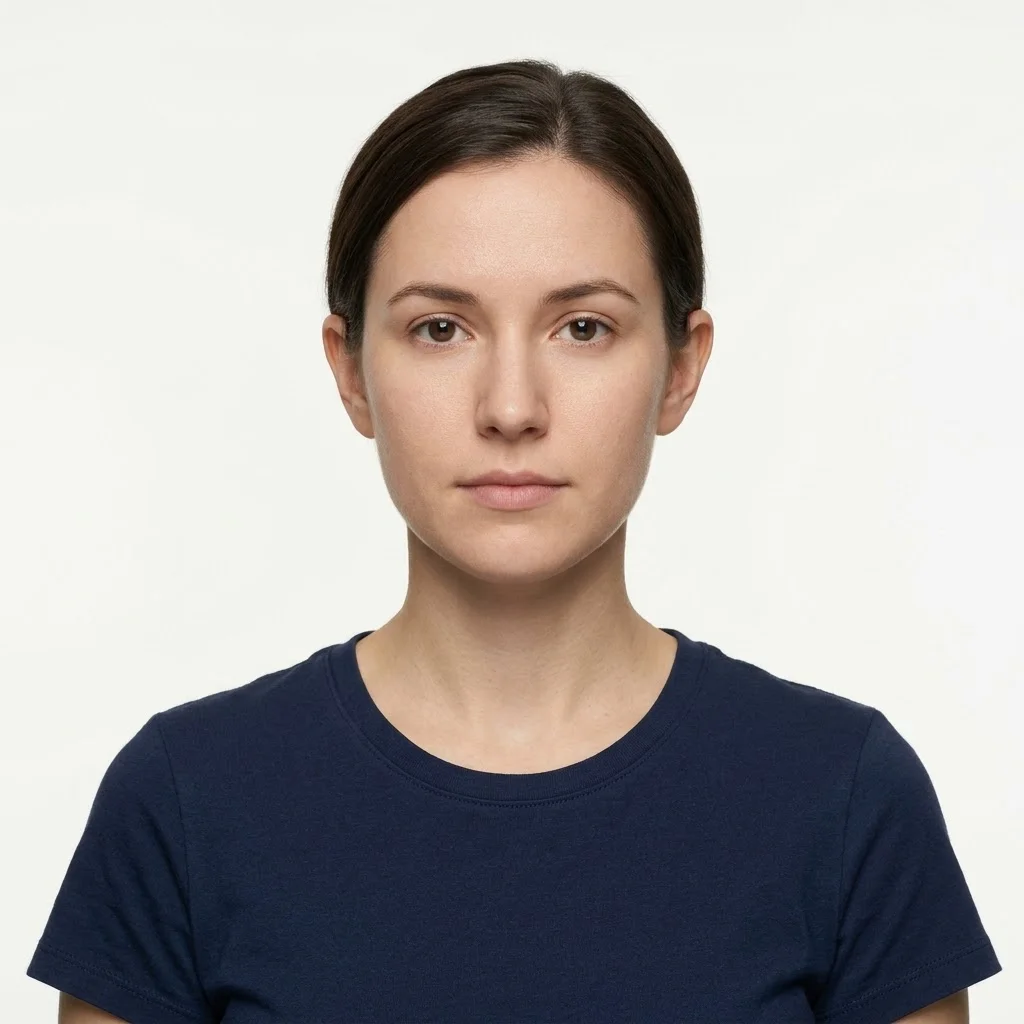
The U.S. Department of State Passport Photo Clothing Requirements
The U.S. Department of State enforces specific rules on restricted attire and accessories, while general color and styling choices remain practical recommendations. Review the complete U.S. Department of State photo rules and guidelines for technical dimensions and lighting standards, or check the most common reasons passport photos are rejected before submitting your application.
Below are the official federal rules regarding passport photo attire and appearance:
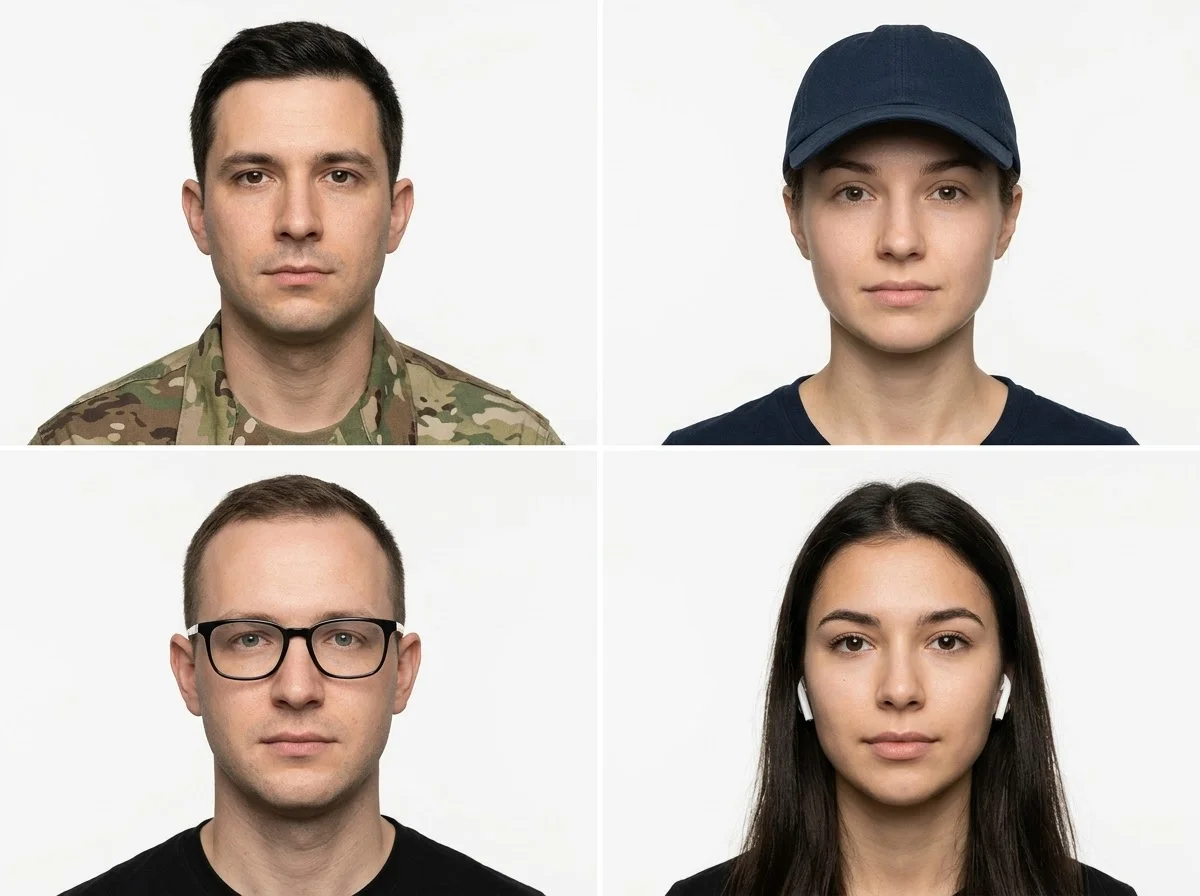
No uniforms or camouflage: Applicants cannot wear a uniform or clothing that looks like military or camouflage attire in a passport photo.
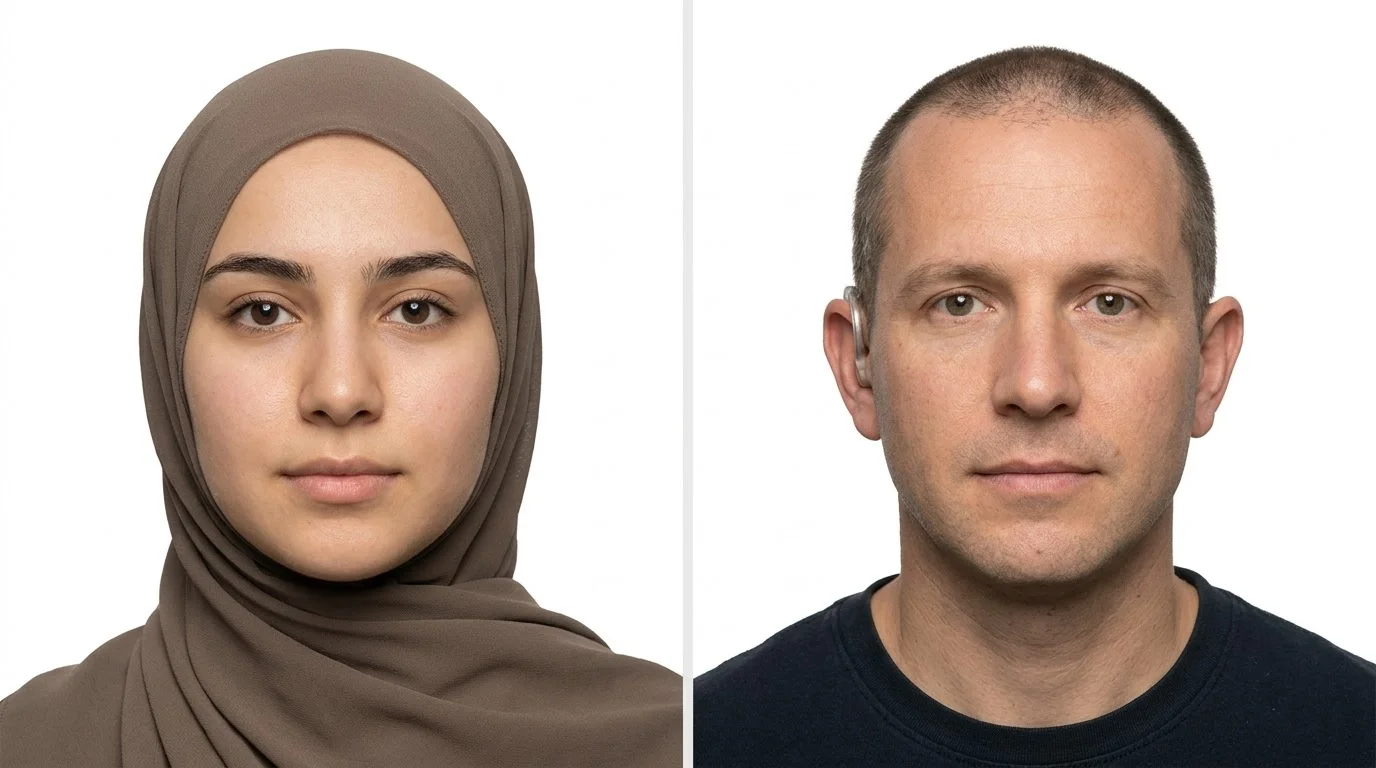
No hats or head coverings (with two exceptions): Hats and head coverings must be removed unless worn daily for a religious purpose (supported by a signed statement from the applicant confirming daily public wear) or for a medical purpose (supported by a signed doctor's statement). Under an approved exception, your full face must be visible; no shadows or blocked parts of your face; the covering must be one color; and the material must not have patterns or small holes.
No eyeglasses (with one exception): Eyeglasses — including prescription glasses, sunglasses, tinted lenses, and frames resting on the head — cannot be worn unless required for medical reasons supported by a signed doctor's note.
No headphones or wireless ear devices: Headphones and wireless hands-free devices worn in or on the ears must be removed. The only exception is a hearing aid or a cochlear implant worn daily — in this case, no medical statement is required.
No face masks or face coverings: Masks and any other coverings over the face must be removed. This requirement does not override a documented religious or medical exception for a head covering, provided the full face remains visible.
Jewelry and facial piercings: Jewelry and piercings are permitted as long as they do not hide any part of the face.
Hair position: Hair cannot cover the eyes or obscure the face. Long or voluminous hair may extend past the edges of the photo as long as the entire head is shown at the proper size.
Passport Photo Clothing Colors and Styles: Best Shirts to Wear
Beyond the ban on uniforms and camouflage, the U.S. Department of State doesn't restrict shirt colors or casual cuts. The tips below are practical recommendations to avoid poor contrast and awkward cropping.
Take your photo against a plain, light wall in even lighting — PhotoGov replaces it with the plain white background, as required by the U.S. Department of State.
When choosing a shirt color for a passport photo, focus on creating separation between your shoulders and the white backdrop. The best color to wear for a passport photo is a medium-to-dark solid shade:
Navy blue
Black
Charcoal gray
Burgundy
Forest green
Applicants frequently ask what color can you not wear for a passport photo. The U.S. Department of State doesn't prohibit any color, but it's best to avoid very light tones. We don't recommend wearing a white shirt, cream top, ivory blouse, or pale pastel tee because light fabric may blend into the white background and make your shoulders disappear in the final image.
Consider these styling tips for common casual tops:
Patterns and logos: Bold prints, loud stripes, and oversized logos are not banned, but solid fabrics keep the focus on facial features. Avoid emblems or patches that resemble military, pilot, or law enforcement uniforms.
Tank tops and low necklines: A tank top or wide neckline is permitted, but U.S. passport photos are cropped just below the collarbones. Thin spaghetti straps, strapless tops, or deep V-necks can fall below the bottom border, creating a bare-shouldered appearance. A crew neck, boat neck, or collared shirt keeps your clothing visible within the 2x2 inch frame.
Hoodies and sweatshirts: A plain hoodie or crewneck sweatshirt is acceptable everyday attire. Keep the hood down and flat behind your neck so bulky fabric doesn't obscure your jawline or cast shadows on your neck.
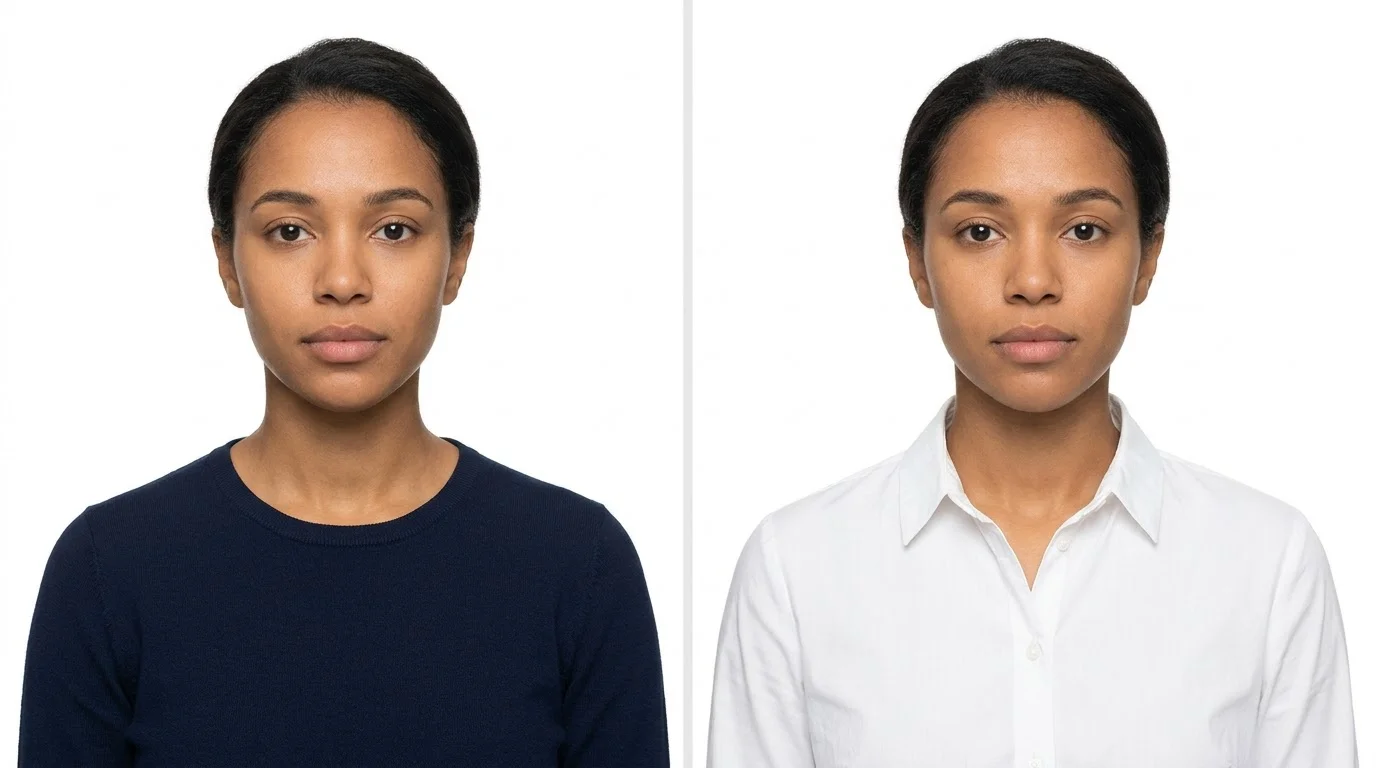
What to Wear for a Passport Photo for Women
Federal rules do not establish separate dress codes by gender, so women can wear casual blouses, T-shirts, knit tops, or dresses. The primary framing factor for women's clothing is neckline height. Because the portrait crops close to the shoulders, off-the-shoulder cuts, tube tops, and thin cami straps often drop out of view. Selecting a top with standard shoulder coverage keeps the neckline clearly defined in the cropped photo.
What to Wear for a Passport Photo for Men
Men do not need to wear formal business attire, suits, or neckties for a U.S. passport photo. A solid crew-neck T-shirt, polo shirt, sweater, or casual button-down shirt works equally well. If wearing a collared shirt, ensure the collar lies flat and does not flip upward near the chin. For guidance on grooming a beard or mustache before your photo session, refer to the hair and facial hair section below.
Passport Photo Hair and Facial Hair Rules: Hair Up or Down, Bangs, and Beards
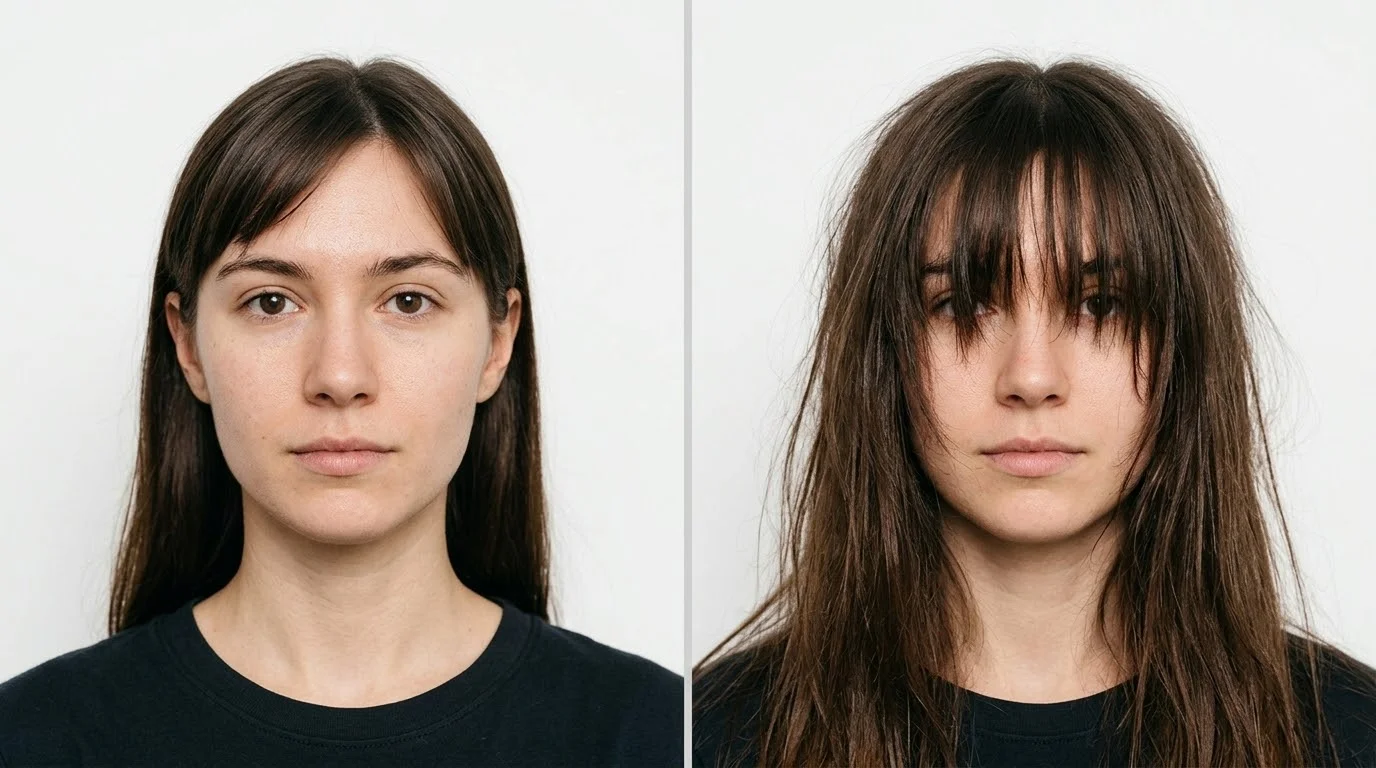
Deciding whether to wear your hair up or down for a passport photo is a personal styling choice, not a federal rule. Ponytails, buns, braids, and loose hairstyles are all acceptable. Under U.S. Department of State requirements, your hair must not cover your eyes or obscure any part of your face. If you have long, thick, or voluminous hair, it does not need to fit entirely inside the frame; your hair may extend past the edges of the photo as long as your entire head is visible and scaled to the required dimensions.
Wearing bangs in a passport photo is also permitted, provided the fringe stops above the eyes. If bangs hang over your eyes or cast dark shadows across your eye sockets, sweep or pin them to the side before taking the shot.
Regarding beards and mustaches, applicants are not required to shave or alter their facial hair for a passport photo. As a practical recommendation, wear your beard or mustache as it normally looks in everyday life. Under official U.S. Department of State rules on appearance changes, growing or shaving a beard — or coloring your hair — does not require applying for a new passport.
Makeup, Jewelry, Piercings, and Tattoos in a Passport Photo
The U.S. Department of State has no restrictions against wearing makeup in a passport photo. As a practical tip, apply natural, everyday makeup that reflects your usual appearance. Avoid heavy contouring, dark smoky eye makeup, or thick false eyelashes that can obscure your eye shape, and use matte powder rather than high-shine highlighter or glossy lip products that can create camera glare in bright lighting.
Under federal requirements, earrings, necklaces, and facial piercings are permitted in a passport photo as long as they don't hide or obscure the face. As a styling tip, small, non-reflective studs are preferable to oversized metallic hoops that can reflect flash or lamp light onto the cheeks.
For visible tattoos, the U.S. Department of State does not prohibit neck or facial ink in the photo frame, so you do not need to conceal tattoos with clothing or cosmetics. However, federal rules distinguish between existing tattoos and major appearance changes: while having tattoos or piercings is acceptable, adding or removing a large number of prominent facial tattoos or facial piercings constitutes a significant change in appearance that requires applying for a new passport.
Passport Photo Glasses and Head Covering Rules
Under U.S. Department of State rules, you must remove all eyeglasses — including prescription glasses, sunglasses, tinted lenses, and frames pushed up on the head — for a passport photo unless you wear them for a medical necessity supported by a signed doctor's statement. Hats and head coverings must also be removed unless worn daily for a religious purpose (accompanied by the applicant's signed statement), or a medical purpose (accompanied by a signed doctor's statement), and the full face must remain completely visible without shadows. Also, remove headphones, wireless earbuds worn in or on the ears, and face masks. As we already mentioned above, you may wear a hearing aid or cochlear implant in a passport photo, and no medical statement is required in this case. For detailed requirements on medical and religious documentation, check our guide on glasses and head covering rules.
What Babies and Children Should Wear for a Passport Photo
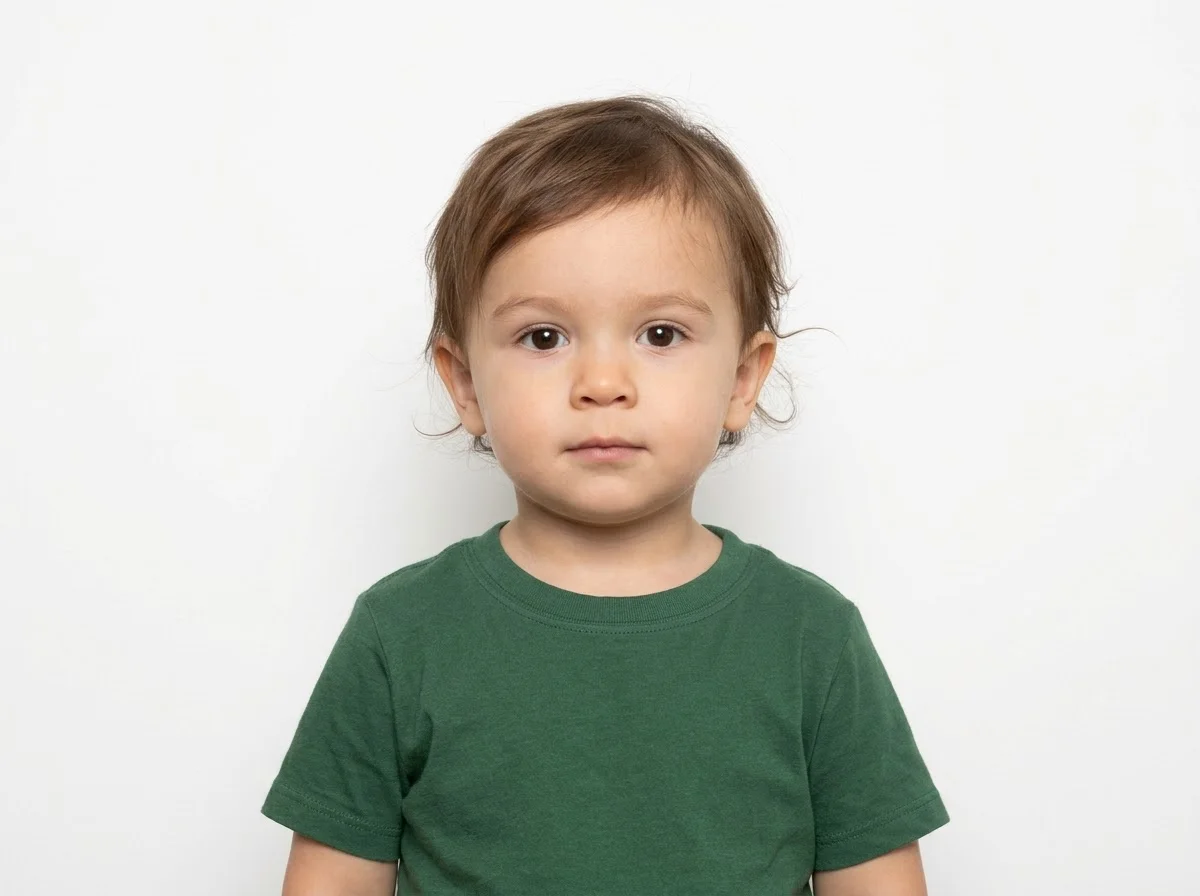
Infants and children should wear simple, everyday clothing in a solid darker color that contrasts with the white background. Under official U.S. Department of State rules for babies and toddlers, no other person or supporting hands can appear in the frame; the child must have a neutral facial expression. While a newborn's eyes may be partially open, all other children must have both eyes open. For positioning methods and framing advice, read our complete guide to baby and child passport photos.
Passport Photo Facial Expression Rules
Acceptable posture and facial expression are as important as proper attire. For adults and children past toddler age, U.S. Department of State rules require facing the camera directly with a neutral facial expression or a natural smile with the mouth closed and both eyes open and visible. To see acceptable examples before taking your picture, review our guide on can you smile in a passport photo.
Before the Capture: Passport Photo Dress Code Checklist
Review these ten points right before taking your passport photo:
Everyday street clothing: Confirm you are wearing casual clothing and not a uniform, uniform-style shirt, or camouflage attire.
Contrasting shirt color: Choose a solid, medium-to-dark top (such as navy blue, black, charcoal, or burgundy) and avoid white or cream shirts that may blend into the white background.
Visible neckline and flat hood: Ensure your shirt neckline sits high enough to appear inside the shoulder crop, and lay any hoodie hood flat behind your neck.
Clear eyes and face: Brush hair and bangs away from your eyes so your full face is unobstructed.
No eyeglasses or hats: Remove prescription glasses, sunglasses, and hats unless you have a documented medical or religious exception.
No ear devices (except for hearing aids) or masks: Take out wireless earbuds or headphones and remove a face mask.
Low-glare makeup and jewelry: Make sure earrings or facial piercings don't obstruct your facial features, or blot away shine or reflective glare.
Direct gaze and expression: Face the camera straight on with both eyes open and either a neutral expression or a natural, closed-mouth smile.
Plain wall and even light: Take your photo against a plain, light wall in even lighting — PhotoGov replaces it with the plain white background the U.S. Department of State requires.
Format and check your image: Upload your photo to the US passport photo tool to set the background and crop, or check a what to do if your photo is rejected page if you are replacing a returned application photo.
Frequently Asked Questions
What to Wear in My Passport Photo?
Wear everyday clothing in darker colors contrasting with the white or off-white background. Military attire, including camouflage and uniforms (or clothing that resembles them), is prohibited in U.S. passport photos.
What Is the Best Color to Wear for a Passport Photo?
Medium-to-dark solid colors — including navy blue, black, charcoal gray, burgundy, and forest green — are recommended because they provide clean visual contrast against the required plain white background. Avoid white and light-colored tops as they can blend with the background.
Can I Wear a White Shirt in a Passport Photo?
Wearing a white shirt is not prohibited by the U.S. Department of State. However, it's best to avoid white, cream, and pale pastel tops because they may blend into the white background.
What Color or Clothing Can You Not Wear in a Passport Photo?
Federal rules don't ban any specific shirt color, but you cannot wear uniforms, clothing that looks like a uniform, or camouflage.
Can you Wear a Tank Top or a Hoodie in a Passport Photo?
Yes, you can wear both tank tops and hoodies as everyday attire. As a practical tip, avoid thin straps or deep necklines that drop below the shoulder crop, and keep a hoodie hood down and flat so it does not cast shadows on your face.
Can I Wear a Religious Head Covering in My Passport Photo?
Yes. You can wear your religious head covering in a passport photo. You must provide a signed statement confirming you wear it daily in public. The same applies to head coverings worn for medical purposes (supported by a signed doctor's statement).
Should I Wear my Hair Up or Down for a Passport Photo?
You may wear your hair either up or down, and bangs are acceptable as long as hair does not cover your eyes or obscure any part of your face. Long or thick hair may extend past the edges of the photo provided your entire head is visible and properly sized.
Can You Wear Makeup in a U.S. Passport Photo?
Yes, makeup is allowed. We recommend natural, matte makeup without heavy contouring or glossy highlighter so lighting doesn't create shadows or glare on your face.
Can You Wear Earrings And Facial Piercings In a Passport Photo?
Yes. Under U.S. Department of State rules, you may wear earrings, necklaces, and facial piercings as long as they do not hide your face.
Do I Need To Cover Facial Tattoos or Shave My Beard for a Passport Photo?
No. Visible tattoos do not need to be covered, and beards or mustaches should be worn as they normally appear in daily life. Growing or shaving a beard does not require a new passport, whereas adding or removing a large number of prominent facial tattoos or facial piercings requires a new passport due to a major change in appearance.
Can I Wear Glasses Or A Hat In My Passport Photo?
No. Eyeglasses and hats must be removed. Eyeglasses are permitted only with a signed doctor's statement confirming a medical need, and head coverings are permitted only for documented religious or medical reasons where the full face remains visible.
Can I Wear a Hearing Aid in My Passport Photo?
Yes. The U.S. Department of State officially allows a hearing aid in your passport photo, with no medical statement needed. However, you must remove all headphones and wireless hands-free devices.
Official Government Sources
Checked against the U.S. Department of State passport photo standards · Last checked: October 20, 2026
U.S. Passport Photo Requirements: U.S. Department of State
Applying for a Passport as a Person With Disability, Photo Rules (hearing aids, etc.): U.S. Department of State
Biometric Standard for Machine Readable Travel Documents: International Civil Aviation Organization ICAO Document 9303
Was this helpful?
91 found this helpful
Top expert
Based on official government sources
Helpful votes: 91
Was this helpful?
91 found this helpful
Service provided by Y VISION TECHNOLOGIES LLP · Stoney Works 8 Stoney Lane, London, England, SE19 3BD · Terms · Refund policy · Contact
We value your Privacy
We use cookies to enhance your browsing experience, serve personalized ads or content. By clicking “Accept All”, you consent to our use of cookies.